THE LAST DITCH

Auschwitz is the German name for Oświęcim in Poland. To the majority of its inhabitants before the Second World War, it was known by its Yiddish name, Oshpitzin. Because of the notorious concentration camp, Oświęcim's main industry is now – as the unpleasant jargon has it – "necrotourism".

The number of visitors on an unpleasantly hot Summer day was astonishing. The parking and other facilities (though improved since I first visited in the 1990s) are barely adequate. One of our group commented that it was too "touristic" for his taste, but what are the locals to do? More than a million people have already visited this year and – though it can hardly be pleasant to have your town known for genocide – they must be served.

Birkenau – the purpose built extension to Auschwitz – was many times bigger and much more typical. It was where the railway terminated that served both camps. Its building at that railhead is iconic, but "Auschwitz" is the name that everybody knows.

It is no rail-side killing ground nor ramshackle set of wooden huts. It is a substantial set of buildings; originally erected as barracks for pre-war Polish soldiers. It was adapted to its infamous use by occupying German forces, who cleared a 40km zone around it so that they could work in secret.

I have visited before but found it no less uncomfortable a second time. I found that being there made me not only sad but somehow angry. I feel sorry for the guides. They are professional, informative and empathetic. They strike a perfect tone in their explanations, but they must quail at the strong emotions in their visitors.

Our morning ended at an exhibition of photographs and film clips of the lives of European Jews before the Holocaust. It brought home the reality of what we have lost. The Nazis almost delivered their "final solution". Sixty percent of the world's Jews lived in Europe and they killed more than half. Our continent cannot possibly be what it would have been had they lived.

At this point – reflecting over our simple lunch on visiting three death camps in as many days – I reached my limits. Artfully composing images of the site of a genocidal outrage just seemed a vile thing to do and I wanted to stop.  Instead of going on to Birkenau with the rest of my group, I sat and reflected nearby over a cold drink. Perhaps I should have been stronger.

As our tour bus took us back to Kraków, our leader told us that he had cancelled our planned meeting for the evening. He sensed we needed time to recover. Of course, compared to what the prisoners at these camps endured, we have nothing that remotely approximates to a problem, but I for one was grateful. I need a chance to be my essentially happy self and not just a sad, dutiful witness to disgusting history.

At some point we must raise a glass and drink "to life". That is my plan for this evening. L'chaim!
 

FODZ-1

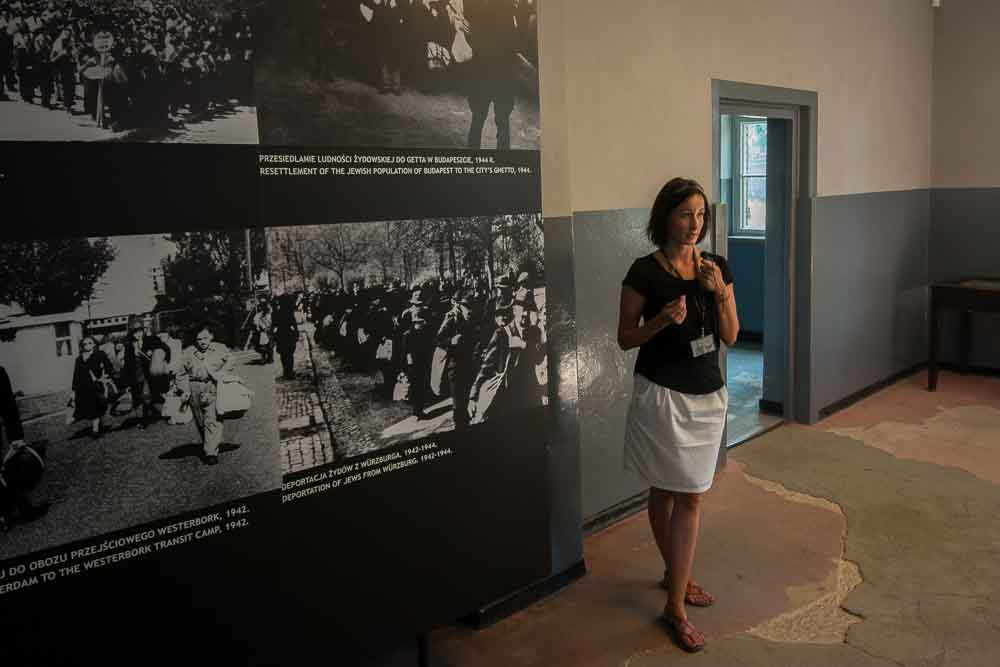
Our guide, Sylwia shows photographs taken by Nazi soldiers, contrary to orders
FODZ-2

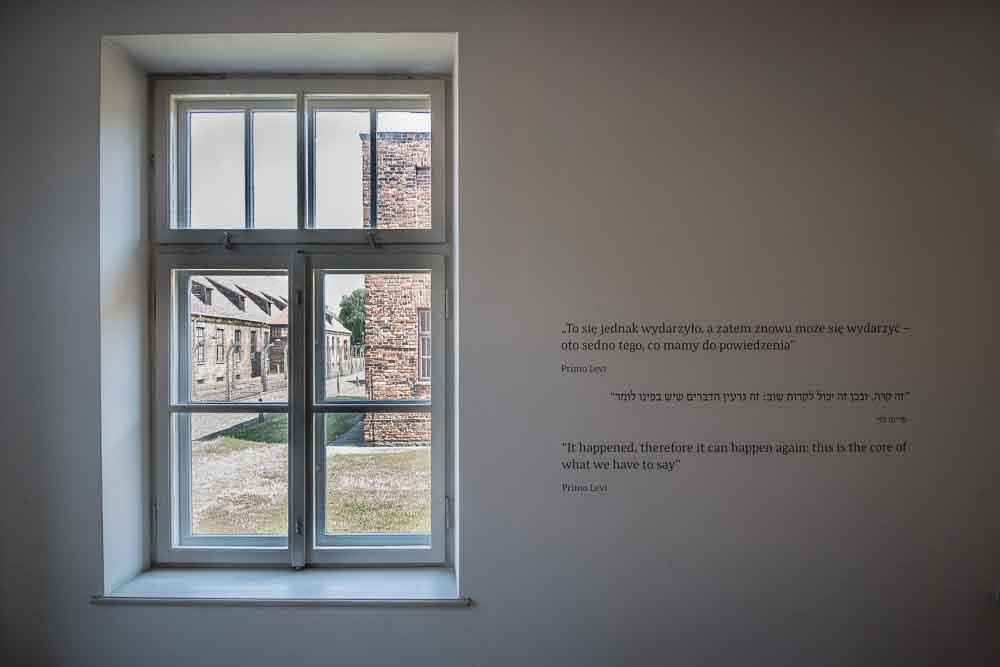
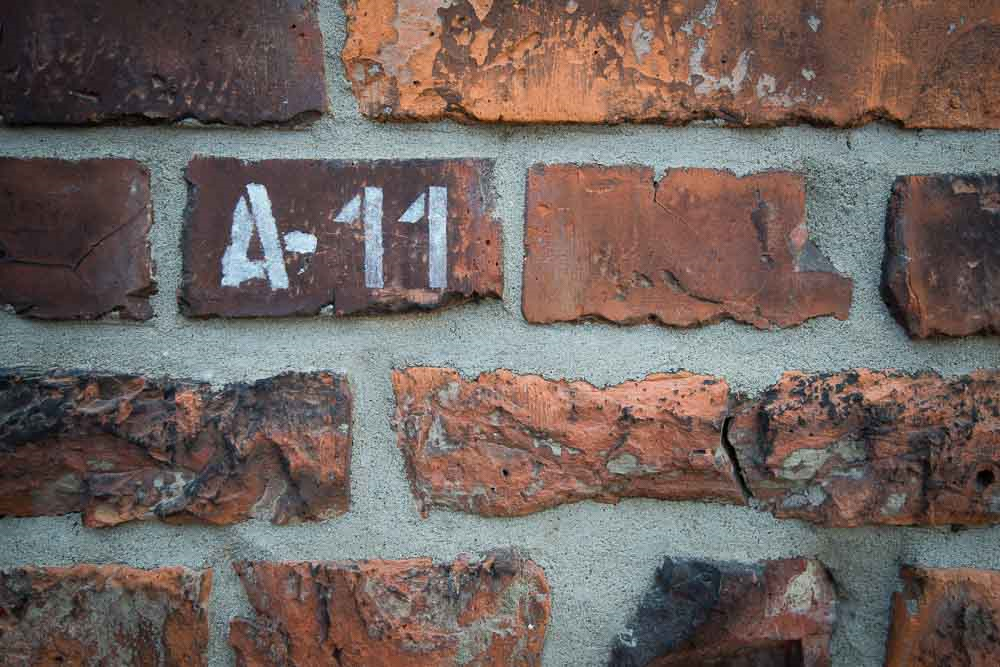
Signage
FODZ-3

[Click to enlarge] The rationale for this disturbing museum

2 responses to “An icon of genocide”

  1. Grzegorz A. Buczek Avatar
    Grzegorz A. Buczek

    Toponimia: https://pl.wikipedia.org/wiki/O%C5%9Bwi%C4%99cim >>> somehowe more detailed info about the origin of the name Oświęcim: Oświęcim jest polską nazwą miejscowości o 800-letniej historii. Pisownia wyrazu potwierdza jego słowiański charakter[5]. Etymolodzy zaliczają go do nazw dzierżawczych (Oświęcim – gród Oświęcima). W zachowanych materiałach nazwa „Oświęcim” występuje w różnych językach – polskim, czeskim, niemieckim lub łacińskim, np.: Ospenchin (1217 r.), Osvencin (1280 r.), Hospencin (1283 r.), Osswetem (1290 r.), Uspencin (1297 r.), Oswentim (1302 r.), Wswencim (1304 r.), Auswintzen (1312 r.), Oswiecim (1314 r.), Oswencin (1327 r.), Oswanczimie (1333 r.)[6], Auswieczin (1372 r.), Awswiczin (1372 r.), Uswiczin (1400 r.).
    Nazwę miejscowości w zlatynizowanej staropolskiej formie Oszwyancim wymienia w latach (1470-1480) Jan Długosz w księdze Liber beneficiorum dioecesis Cracoviensis[7].
    Miejscowość pod nazwą Ozwieczin na mapie Księstwa Oświęcimskiego i Zatorskiego z 1603 roku zaznaczył flamandzki geograf i kartograf Abraham Ortelius[8].
    Spotykamy się także z innymi przekazami: Ossvancin, Osvencim, Osvenczyn, Osvacim, Osswanczyn, Ossvijancin, Osswancin, Oswęcim, względnie Ossvencim. W łacinie nazwa zapisywana była jako Osswencimen lub Osviecimensis. Jako że Oświęcim był ważnym ośrodkiem handlowym, niemieccy kupcy oraz osadnicy nadawali mu swoją, niemieckojęzyczną nazwę – Auswintz, co znalazło odzwierciedlanie w XIV-wiecznych dokumentach książąt opolskich i cieszyńskich. Niemiecka nazwa miasta Auschwitz zaczęła się pojawiać już w XV wieku na różnych mapach geograficznych niemieckojęzycznych, w słownikach i opracowaniach historycznych. W okresie zaboru austriackiego, tj. w latach 1772-1918 widniała w dwujęzycznych dokumentach, Oświęcim z polskiej wersji był w niemieckim tłumaczeniu miastem Auschwitz. Po włączeniu do Rzeszy Niemieckiej okupant zmienił nazwę z polskiej ponownie na niemiecką. Dlatego w nazwie Konzentrationslager pojawiła się niemiecka nazwa Oświęcimia. Zaraz po zajęciu Oświęcimia przez Armię Czerwoną (27 stycznia 1945) miastu przywrócono jego polską nazwę.

    Like

  2. Tim Newman Avatar

    Sixty percent of the world’s Jews lived in Europe and they killed more than half. Our continent cannot possibly be what it would have been had they lived.
    A point made in this book, which I’m reading now.

    Like

Leave a reply to Grzegorz A. Buczek Cancel reply

Tom is a retired international lawyer. He was a partner in a City of London law firm and spent almost twenty years abroad serving clients from all over the world.

Returning to London on retirement in 2011, he was dismayed to discover how much liberty had been lost in the UK while he was away.

He’s a classical liberal (libertarian, if you must) who, like his illustrious namesake, considers that

“…government even in its best state is but a necessary evil; in its worst state an intolerable one.”

Latest comments
  1. Lord T's avatar

    They are servants. Just not of the public. He gets a full pension because he did his job for his…

  2. alec5384's avatar
  3. Lord T's avatar
  4. tom.paine's avatar
  5. Lord T's avatar