THE LAST DITCH

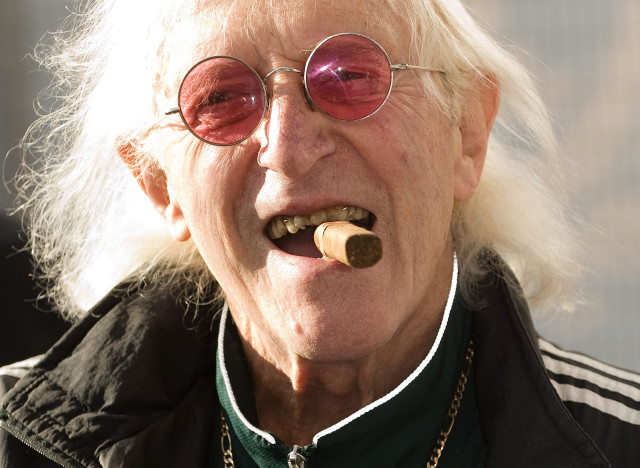
A-JIMMY-SAVILE-640x468I applaud the BBC's decision to allow Panorama to investigate what it knew about Jimmy Savile's misconduct and why the Newsnight story about his alleged paedophilia was pulled. The video is available for a while to UK residents on the BBC iPlayer here:

Any organisation that is not dependent upon its customers, whether a state or private monopoly, will eventually become self-serving. During my career I was party to many conversations about how to maximise profit for the owners of our businesses and provide attractive employment terms for our staff, but they all turned in the end to what our customers would want, or at least accept. We spent much more time worrying how to please customers than please ourselves. Satisfied customers who choose to come back are the only guarantee for owners, managers and workers in the private sector that they can achieve their personal goals.

As will all state enterprises funded by taxation, the BBC has become, in effect, a worker's co-operative. The "customers" have to pay regardless, so they become irrelevant and the focus turns to the interests of its own people. No private business would survive the shit storm that is heading the BBC's way. The share price would now be collapsing as investors tried to get out before the lawsuits begin. I confidently and sadly predict however that the BBC will survive. It has the coercive power of the state behind it and will simply take your money to settle the cases. It is the left establishment's propaganda arm and they will rally to restore its reputation.

We are about to have an instructive, but depressing, demonstration of the realities of modern Britain. We will be able to compare and contrast the BBC news and current affairs teams' handling of this story with their campaign against News International. Just imagine if the phone-hackers had worked for Newsnight and Savile had worked for Sky News!

Predictable though it all was, it was still disturbing to follow Panorama's account of the decision-making process within the Corporation. There was lots of high-falutin' stuff about editorial independence and a clear concern for the BBC's reputation. There was also some po-faced nonsense about depending on the trust of a public that, trusting or not, it will continue to plunder by use of state force. Not one person (apart from those making official statements once the story was out and the lady reporter from Newsnight who will no doubt pay for it when the storm has passed) expressed any convincing concern for their customers-by-force. Some of whom have, it seems, been abused by members of the collective and friends under their protection.

I watched the faces of the people making the allegations and it brought back another memory from the days of watching Jim'll Fix It. I found a girl from my school in a drunken heap at the side of the road on my way home from a date with my girlfriend one night. I tried to help her to go home. It turned out she was in social services care and lived in a nearby childrens' home. When I offered to take her there she begged me not to. She offered sex if I would take her somewhere, anywhere, else. Indeed, "offered" is something of a euphemism. If I had a victim mentality, I would say she attempted rape. I was able to restrain her and decline her offer.

I asked if she had relatives and she told me about an uncle who lived in the area. In retrospect, I worry that she made him up or that her relationship with him was rather different, but I was a naive teenager. I took her to a nearby pub and gave her the money to call him. I left her in the care of the publican, once assured her uncle was on his way.

I later found out that she lived in one of the homes at the centre of a notorious scandal. It rather explained both her reluctance to go there and her use of sex as a currency. I now dread to think what she was going through while I was enjoying a safe and happy childhood. I am ashamed to have ever thought myself hard done to by my strict parents, when I consider what that girl had been put through by the "caring" state professionals paid to look after her.

Here is the fatal flaw in all collectivist thinking; the reason why public service organisations are all more or less corrupt and can never fully be trusted. Here is the reason why Britain's public intellectuals are not merely gullible, idealistic, fools but a serious threat to our welfare.

All organisations funded by force are essentially immoral.

In their detachment from the relentless reality of having to satisfy customers and in their assurance that livelihoods do not depend upon that satisfaction, selfish, abusive behaviours will grow among their staff. Whether in care homes for the elderly, childrens homes, the Parliamentary expenses office, army barracks or police stations bad things will happen not by accident but flawed design. To be clear, I am not saying that public sector workers are all, or even mostly, evil or ill-intentioned. I am just saying that a disproportionate number of the lazy, greedy and wicked in any society will be attracted, as Savile was, to positions they are able to abuse. Nor am I saying there should be no public sector. I am not an anarchist. I accept the need for a state. But here is a strong argument for it to be kept to an absolute minimum.

There is a reason socialist states have always had to resort to prison camps and shootings to maintain discipline and reduce corruption in the ranks. At least, that is, within limits that don't threaten the corrupt gains of their ruling elites. In the absence of Stalinist discipline, what happened at the BBC – the way the collective closed ranks to protect an insider – is not a sad exception to the rule. It is the rule.

58 responses to “The BBC is a worker’s co-operative”

  1. Mark Avatar
    Mark

    Legal firms are also more or less worker cooperatives.

    Like

  2. Mark Avatar
    Mark

    (the form of ownership is less important than exposure to competition… John Lewis etc.)

    Like

  3. Mark Avatar
    Mark

    “All organisations funded by force are essentially immoral”
    Everyone accepts that in order to have a functioning market we need a legal system with rules, en- forced. How is ownership determined? Without legal systems or force backing up ownership, would any company be able to make money?
    There isn’t a fundamental moral difference between public and private bodies.

    Like

  4. Tom Avatar

    What absolute trash. (a) they are subject to relentless competition and (b) the owners work in the enterprise, certainly, but they typically represent about 10% of the workforce.

    Like

  5. Tom Avatar

    Even more important is the source of income. The BBC needs no customers at all, whether it has competitors or not. It is funded, just like a mafia, with money taken at gunpoint from the unwilling.

    Like

  6. Tom Avatar

    Because we agree a policeman or a court bailiff should use force in certain circumstances does not legitimise all force. There is an enormous moral difference between organisations we choose to pay and organisations we must pay; e.g. the BBC or its private sector counterparts; extortionists.

    Like

  7. Mark Avatar
    Mark

    Why shouldn’t a wokers co-operative exist in a market economy and be exposed to competition?
    Do the cleaners at the bbc make important decisions about the enterprise? What percentage of employees do, do you think?

    Like

  8. Mark Avatar
    Mark

    Of course it doesn’t legitimise all force, that’s not the argument.
    You stated that all organisations funded by force are immoral.
    Are you now saying that organisations funded by a little force are ok? If so, whats the problem with modern democratic state, with laws against excessive state force?
    The difference is whether we have a choice? So why not give people a choice of the country they can live in (EU?), presumably we would be solving any problems through the market for pleasent places to live.

    Like

  9. Tom Avatar

    To be clear, I am all in favour of workers’ co-operatives exposed to competition, such as John Lewis or even a hypothetical partner-only law firm. My own business, as a self-employed consultant, is a worker’s co-operative in a sense.
    The cleaners at the BBC might well have been amongst those able to blow the whistle on Savile. Many at all levels of the organisation seem to have known, but the ethos of the BBC was such that they expected any whistle-blowing to be punished. People interviewed by Panorama said it never occurred to them to do so. Why? Because there were no consequences, no threats to their jobs, if a scandal broke. If the whole nation turned off the BBC in disgust, their incomes would still flow. It is a morally-degenerate organisation not by acccident but design.
    A firm I once belonged to found that it had an office run by a man with a history of Savile-like behaviour on his own time and premises and with no evidence it had happened since he had joined. It closed the whole office. It has a sexual harassment claim against a senior lawyer. It closed the whole office. The BBC has, it seems, harboured a group of people who exploited their position at the corporation to commit statutory rape. There have been no consequences. Anyone leaving the BBC will do so with more money than I can dream of for my bad conscience-free retirement.
    I am not sure you fully understood the implications of the final paragraph of my post. If you want to have a public organisation like the BBC it needs, in the absence of the usual civilising influences, to be under Stalinist discipline if it is not to become excessively corrupt. You should be calling now for the responsible comrades there to be put up against a wall. Why aren’t you?

    Like

  10. Tom Avatar

    Do you understand the word “funded”?

    Like

  11. Mark Avatar
    Mark

    People will do the right thing if they fear the consequences of not doing so.
    Almost certainly true – but if the punishment must be external, then there might not be any way to avoid Stalinism. We have to rely on the fact that most people will be restrained by their own minds and moral sense, if we aren’t going to restrain them by force.
    This being the case, I’d prefer to take the opposite tack. The people at the bbc feared to do the right thing because they needed their jobs, were beholden to the organisation for their lifestyles. Remove the dire social consequences of losing a job and allow the individual to make his own personal decisions without fear, by giving him the right to his life (without work) and perhaps things would be different.
    Groups are less rational and moral than individuals, which is why we must do everything to give as much power to the individual as possible.
    Yes, markets and money are a fantastic means of demonstrating individual desires – the best way we have of deciding what is wanted – but if we make what is wanted by some the absolute measure of what everyone must do, we limit the ability of the individual to make a moral decision.
    I have, in my life, failed many times to do the right thing. It was always fear that stopped me. The threat of being up against the wall might have motivated me to behave differently, but if this is our only hope, then we have no hope.
    .

    Like

  12. Mark Avatar
    Mark

    Get money?
    Most taxation isn’t done by force. I’ve never had a gun pointed at me or been tortured for it. The force is implicit.
    Exactly the same with the legal system absolutely neccesary for the funding of business.

    Like

  13. Andrew Avatar
    Andrew

    “There isn’t a fundamental moral difference between public and private bodies.”
    There’s no fundamental moral difference between a body funded through the threat of violence and one funded through voluntary transactions?

    Like

  14. Tom Avatar

    Nonsense on stilts and you know it. Shareholders choose to invest in companies. They are not forced. Banks choose to lend to them. We choose to invest in one of a selection of pension funds, life assurances or deposit accounts. We have no choice about tax.
    If you don’t believe tax is collected by force, don’t pay it and resist all attempts at enforcement. You will soon find the iron hand removed from the velvet glove to dispense explicit force.
    As to the wider society’s willingness to pay, answer me this. If the government announced tomorrow that taxes were voluntary for the next five years, would its collections go down, up or remain the same?

    Like

  15. Mark Avatar
    Mark

    If you don’t believe that Sainsburys relies on force, try taking a can of beans without paying.
    If Sainsburys announced that payment for food was voluntary, that it wouldn’t back up its claims of ownership, what would happen?
    I have the choice of where I shop. Tesco, Sainsburys or Morrisons. You have a choice of where to live – England, France or Germany? You might argue that is not much of a choice. I could do the same.
    The major difference between the private and public sector isn’t the use of force. It is that you hate the word “public” and view the use of force to support it as immoral, whereas the use of force to aupport the “private” is good.

    Like

  16. Mark Avatar
    Mark

    You choose to live in the country you do – so the taxation is voluntary.

    Like

  17. Schrodinger's Dog Avatar
    Schrodinger’s Dog

    Tom,
    Actually, it just might now be possible to bring the BBC to heel, given some resolve by the government. Its left-wing bias has been well-known for years, but doing anything about it was difficult, given that most people still had a certain affection for Auntie Beeb; the Jimmy Savile affair has likely changed that completely. (Besides, the last Labour government had no scruples about rewarding its friends and punishing its enemies, so why shouldn’t the Conservatives?)
    Starting with the TV licence, it’s a complete anachronism. When radio broadcasting started in the 1920s it was impossible to control who received the broadcasts. To ensure programme-makers got paid for their efforts, a system of radio licensing was introduced; to ensure compliance, it was backed by force of law. It was later extended to television when that came along. Now, of course, it would be quite straightforward for the BBC to encrypt its output. Anyone who did not want to buy a TV licence would not have to, but anyone who did not could not receive BBC programmes.
    Such a move would likely be very popular. In these tough times the cost of a TV licence is a burden for many people, while those TV owners who never watch the BBC must surely resent having to pay for it, regardless of whether they are rich or poor. (In the 1980s I remember a case where a man was hauled before the local magistrate for not having a TV licence. This was when videos were becoming widespread and his defence was he only ever used his TV to watch pre-recorded films. He might even have been telling the truth, not that it did him any good.)
    Obviously the BBC would scream blue murder were this to be proposed. So, as I said above, it would require a lot of resolve on the part of the government, so I don’t give it much chance of it ever happening.

    Like

  18. Andrew Avatar
    Andrew

    To save me typing, there’s a decent step-by-step demolition of your argument here:
    http://www.youtube.com/watch?v=jNj0VhK19QU
    The short version: if it’s moral that some individuals can claim universal ownership then it must be moral that all individuals can claim universal ownership, which nullifies universal ownership.

    Like

  19. Mark Avatar
    Mark

    My argument is that there is no entirely voluntary action within society – we are always constrained by the opinion of others and at the base of it, force. You are the one suggesting that a choice makes things voluntary.
    If that is so, you make a choice to live in this country – it is voluntary.
    Whichever way, at root, the difference between private and public sector is not force.

    Like

  20. Mark Avatar
    Mark

    BTW isn’t that video just nonsense?
    The scientific method does not stand up to the scientific method, as I think noted by Hume several hundred years ago…

    Like

  21. Andrew Avatar
    Andrew

    Yes, I make a choice to live in the UK, but, as I noted above, that doesn’t give a bunch of individuals who’ve called themselves the government the right to steal what they want from me. They are no different from the mafia.
    Living here is voluntary, being stolen from is not.
    The primary difference between the voluntary and the coerced sector is force. Without the force they’d actually have to offer a decent service to persuade you to do business with them, using force negates this.

    Like

  22. Andrew Avatar
    Andrew

    “BTW isn’t that video just nonsense?”
    I’m always keen to learn – where does his argument fall down?

    Like

  23. James Strong Avatar
    James Strong

    I haven’t got a TV licence because I haven’t got a TV.
    But I’ve had a letter from the TV licencing authority pointing out that I haven’t got a TV licence as if this is suspicious behaviour. I’ve told them, ‘No TV’ and they still say they might inspect my property.
    I don’t want to pay to watch Victoria Pendleton and/or Michael Vaughan learn to dance, and I am baffled as to why anyone does. There’s a lot of other stuff I don’t want to pay to have access to.
    I like the idea of the BBC encrypting its signals; in the absence of a licence fee I would buy a TV that doesn’t receive BBC.

    Like

  24. Tom Avatar

    I see now that you don’t understand the word “funded”. The can of beans is Sainsbury’s property and yes, if you steal it, you will encounter force – and rightly so. In fact you will encounter far too little of it in modern Britain. There is no comparison at all with how its capital is raised.
    Property rights are the very basis of civilisation. The prosperity of nations varies directly with how strongly they are protected. The more your ideas succeed in undermining them, the faster we shall all slide into poverty.

    Like

  25. Tom Avatar

    I agree with your thinking but fear you are optimistic as to how it would be received. The “intellectuals” I wasted a weekend listening to would be on the airwaves en masse denouncing the idea and the majority of the population would proably believe the left establishment line that it was a right-wing attack by proxies for Murdoch.
    Most people are not thinking at all. Unlike the left I don’t think it’s because they are too stupid and vulnerable to do so, it just that they are accustomed to having their thinking done for them. It’s all part of the infantilisation that makes it unbearable for me to watch the BBC because every presenter talks to me as if she were my infants school teacher.

    Like

  26. Tom Avatar

    It would be far simpler to privatise it. There’s no reason for a democratic state to own a broadcaster. State broadcasters are the emblematic accoutrements of totalitarian societies. There’s a lot of creative talent in the BBC, but it would change sharply if it was subjected to market discipline.
    The dancing shows are a mystery to me too. But then most Brits don’t cook well, yet like to watch top chefs at work. Nigella Lawson aside, that’s an unlikely interest too.
    Their residual interest in excellence – even in trivial fields – is encouraging in a way. It shows egalitarianism has not yet choked aspiration out of them. If the elites stopped telling them they were trapped by their victimhood and they could and should aspire to excellence themselves, the nation could recover from its stupor in time.

    Like

  27. Moggsy Avatar
    Moggsy

    Tom, Your post is sobering and I can’t help but agree. Now you have me worrying about that poor girl also, even tho whatever happened happened long since and the events are beyond our reach.

    Like

  28. Mark Avatar
    Mark

    Well… I have black hair, a beard and green eyes. I am good.
    Does that mean that blackbeard was also good, or that anyone is claiming that he was?

    Like

  29. Mark Avatar
    Mark

    I note that you haven’t disagreed with anything I have said. So I guess you agree that force isn’t the issue here.

    Like

  30. Andrew Avatar
    Andrew

    ?
    Whether someone is good or not is defined by what they do, not their appearance.
    It’s either good to declare and enforce a monopoly of land and violence or it’s not.
    I believe it’s not.

    Like

  31. Tom Avatar

    Who gave you and your fellow bandits title to our country? How dare you tell us to leave!

    Like

  32. Tom Avatar

    I have disagreed with everything you’ve said. The fact that an owner will use force to protect his property (as you would if I came to steal your precious fishing rod) does not mean that he acquired it by force.
    It’s hard to believe even you seriously argue that.

    Like

  33. Tom Avatar

    I know. I think of her often (though I never saw her again after that night) and wonder how her life turned out.

    Like

  34. Mark Avatar
    Mark

    Yes, Colonel…. bandits everywhere… maybe it’s time for some nice cocoa and an early night…

    Like

  35. Mark Avatar
    Mark

    Well, excactly.
    I would also disagree with the idea of a social contract as presented in the video.

    Like

  36. Mark Avatar
    Mark

    I’m not arguing against property rights – you just don’t seem to understand that the majority of wealth in existance is due to a cultural inheritance – that what we have is never due even in the most part to the work we do, but rather to the institutions, knowledge and machinery we have inherited through pure luck.
    That competition might result in the most skilled person doing the work doesn’t mean that everything produced by the skilled man is due to his labour.
    He might not have aquired his position by force, but the idea that the entirity of his product is his and his alone or the idea that he owes the rest of society some product for being allowed to use our social capital both require force (as at the base of things do any social system).
    You seem to agree that both systems require force, but that “private” is such a lovely word, it doesn’t count as real force,

    Like

  37. Tom Avatar

    You might have had a point at the end of the agrarian age but such landowning aristocrats as remain out of poverty are now vanishingly irrelevant. There are multi-billion fortunes less than a decade old. Zuckerberg, for example, owes you nothing. You are just making flimsy constructs to justify your mooching.
    What precisely Mark is YOUR contribution to the “social capital” you mention? You include yourself in “our” institutions etc on what moral basis, exactly? If Berners-Lee were writing your posts, they might have some credence, though he volunteered (God bless him) to waive intellectual property rights that would have made Zuckerberg seem a pauper. From you, however, it’s either narcissism or banditry. Which is it?

    Like

  38. Tom Avatar

    Your argument fails at the fourth premise.

    Like

  39. Tom Avatar

    A killer argument there. Congratulations.

    Like

  40. Monstro Avatar
    Monstro

    I think it would be easier if we always defined our actions in terms of defence not as force. Force to me has always equated itself in my mind as the initiating or aggressive action, whilst any robust action performed in repelling it being one of defence. If ever we must be drawn into using the word force in association with the actions of a true libertarian, then it should be conjoined into a term such as defensive force.
    Tom, I cannot see how a state can remain small, especially with social democracy at play, think ultimately the only true moral position to adopt leads us to what Rothbard calls ‘anarcho capitalism’ as vulgar sounding as the term would be to the modern world – hehe try dropping that term in around your average after dinner conversation!, it surely is the moral way for humans to interact on earth.
    That does not mean we have to do away with democracy, although it would become participatory at a voluntary level only, this would probably result in differing societies living within a collective of their choice.

    Like

  41. Andrew Avatar
    Andrew

    “hehe try dropping that term in around your average after dinner conversation!”
    I tend to define my views before giving them a label, and then I usually use voluntarism rather than anarcho-capitalism.

    Like

  42. Mark Avatar
    Mark

    The point still remains. Just as landowners derived their wealth from the land they did nothing to create, modern man owes his productivity to already existing social structures. Look at any job.
    Zuckerberg owes his wealth not only to the internet, but also the invention of the micro-processor, understanding and harnessing of electricity, the past several thousand years of mathematics, the invention of the public limited company, the financial system, property rights, the general legal and political system, education, Harvard, the US constitution, anti-biotics, the chair… and I guess he also owes some pretty big thanks to the guys whose ideas he stole in making facebook.
    In fact almost everything he is is due to the society he lives in. Are you seriously telling me that you disagree with this?
    And if this is the case for extraordinary people, with incredible talents – it is even more true for ordinary people. Most of the work the ordinary rich do is towards establishing a place in the hierachy so that they are in a position to take advantage of existing capital. Most of the productivity of ordinary workers is due to learned knowledge rather than their own hard work.
    Now, you are entirely free, despite the existence of this inheritence, to insist that there is no redistribution by government, that the chips be left where they have fallen, that everything will work itself out and that force be allowed in defending this system. However, you can’t rightly tell me that this is the natural order, that everything we own is owed to our own hard work and that therefore the force supporting this system is uniquely justified. All social systems require force. The difference between your system and mine isn’t force – I could simply frame taxation as a defence of each person’s inherited rights, if I so wished – the difference is that you happen to disagree with planned distribution of wealth as a principle of society. All of this talk of “evil” “bandits”, just tells me you really don’t like it.
    As for me, what do I do to contribute to the social capital? I communicate with people and by doing so make it easier for us to work together, I dance and sing. I contribute to the dialogue which determines what we should do.
    Why is the inherited wealth of society partly mine? I believe this inheritence must be used to provide each person with a decent minimum and in doing so we would improve all of our lives to a tremendous degree. You believe that the winner must take all – the danger, I think, with your view, is that increasingly as technology improves, we don’t need much from each other, and the competition will not neccesarily be chanelled into socially productive avenues (if it ever has totally been).
    By the way, if there is some level of wealth or achievement that is neccesary before we are allowed to engage in this debate, perhaps you would like to refer to Warren Buffet, who has made the point, that if he were placed in an amazonian tribe he would be worth nothing or Isaac Newton, who also said something similar. .

    Like

  43. Mark Avatar
    Mark

    “you’re a bandit” is any better?

    Like

  44. Tom Avatar

    There’s no wealth or intelligence qualifier to joining the debate. You may have not noticed that I am hosting the debate here and encouraging you to take part. I was merely trying to help you notice how arrogant you are in assuming your entitlement to wealth earned or created by others.
    The flaw in your argument about Zuckerberg is that all those things to which you say he “owes” his wealth were equally available to you. You are like the man who said to Picasso “I could have done that” and to whom Picasso replied “but you didn’t.”
    I remain convinced, for all your borrowed sophistry, that you are driven by envy and covetousness. You say you defend property rights, but you claim a portion of Zuckerberg’s (and everyone else’s who has more than you) for yourself and those you think can be persuaded by your meretricious constructs to band with you.
    That’s why, though you may abuse me for saying so, you are nothing more than a bandit. Everyone who ever gained power by claiming to want to redistribute wealth (Lenin, Stalin, Mao, Castro, Blair, Brown, Prescott et al) ended up redistributing it primarily to themselves.

    Like

  45. Mark Avatar
    Mark

    I wouldn’t claim to have made a contribution equivalent to that of the man who brought us face book, I only claim that there is no natural law dictating that everything produced should be owed to labour (isn’t that actually a bit marxist of you?) and that given this we should provide everyone with enough to live – either because we believe this to be a kind thing to do, or because we fear for a society in which people are not provided with sufficient.
    I’m happy for him to have his castles as long as I’m allowed to eat, read books and shelter from the cold without being forced into unneccesary slavery.
    Borrowed sophistry?

    Like

  46. Tom Avatar

    “..we should provide everyone with enough to live…”
    But, again, you are not included in that “we”. You are advocating the partial expropriation of others to support a group that includes you. You made it clear when first you posted here that you want to go fishing and would take advantage of a “citizens’ wage” to do so. You are demanding that others work to support you and to quote Abraham Lincoln;
    “It is the eternal struggle between these two principles — right and wrong — throughout the world. They are the two principles that have stood face to face from the beginning of time, and will ever continue to struggle. The one is the common right of humanity and the other the divine right of kings. It is the same principle in whatever shape it develops itself. It is the same spirit that says, ‘You work and toil and earn bread, and I’ll eat it.’ No matter in what shape it comes, whether from the mouth of a king who seeks to bestride the people of his own nation and live by the fruit of their labor, or from one race of men as an apology for enslaving another race, it is the same tyrannical principle.”
    Ironic then, isn’t it, as as someone seeking to have others “work and toil and earn bread” while you eat it, that you should use the words
    “…without being forced into unneccesary (sic) slavery…”
    I am genuinely sorry that your find your work slavery. I have always rather enjoyed mine, whether I was sweeping floors, carrying bricks in a hod, serving behind the bar in a pub or advising clients as a lawyer. There is a dignity in it, you see. A joy in being independent and making one’s own way. I respect anyone, however simple their skills, if they will only try to make the best of themselves.
    You are clearly not a complete fool, Mark. You are trying to understand the world around you and I respect you for it. I am sure you could do better in life than to work at a job you find so dispiriting as to equate the need to do it to slavery. You should really consider retraining in something that would give you more satisfaction.

    Like

  47. Mark Avatar
    Mark

    I find the latter part of this far more compelling than the fallacious “no violence” argument – but essentially, here, your position is buttressed using collectivist, rather than individualist, principles. People will make the best of themselves by contributing to the welfare of others. We should envy those who find a way to enjoy contributing to society.
    I agree with this. We should respect those who work to help others and improve the lot of all of us. We should reward them so as to encourage this behaviour.
    I, however, entirely disagree that it is necessary or desirable to make this contribution a requisite for being considered a member of society and I entirely disagree that all work is of this nature, particuarly under the present system.
    It isn’t envy which drives me – rather, it is envy which drives working people to support punishment for the unemployed. It is the desire to enforce social norms which prevents us from leaving others to do what they will.
    Further, by making a fetish of work we not only force people to pretend that the unnecesary is important, but we also trick them into believing that a job is a sufficient contribution to make – that work is morality. There is so much more to justice, right, than that.
    There is a tractor sitting in a field. Three of us arrive and find it. By using it we can produce more than enough to feed all of us. You claim the best tractor driver should be given all the food and that the other two must try to find some way to please him in order to receive dinner. I claim that whoever uses the tractor should be required to provide something to the others. Some would suggest that all three men should be made to work an equal share of time and/or receive an equal share of the food.
    I don’t consider my system slavery because I believe that there will be sufficient people who choose to work, knowing that some portion of their work will be used to support others. I imagine that most people would choose to work. I think that because it is the system we have now.
    I think that your system is increasingly obselete, because the tractor driver does not necessarily require anything from the other men, as well as unpleasent, since it gives him absolute power over his fellows.
    Anyway, I’m sure you disagree, but whichever way, it is the respective benefits and drawbacks of these systems that we should be discussing. Claiming that your version of society is the only one without force, is, frankly, childish. Every society requires force, to exactly the same degree – the degree to which some disagree with its principles and others are determined to live by them.
    PS personal advice spot on!

    Like

  48. Tomsmith Avatar
    Tomsmith

    “Nor am I saying there should be no public sector.”
    There should be no public sector. As your argument with the socialist showed, minarchism leaves nothing firm upon which to base an argument. Being clear on this point makes the argument work

    Like

  49. Tomsmith Avatar
    Tomsmith

    “Well… I have black hair, a beard and green eyes. I am good.
    Does that mean that blackbeard was also good, or that anyone is claiming that he was?”
    No, this contradiction invalidates your original argument. Molineux is claiming to invalidate the social contract argument in the same way

    Like

  50. Tomsmith Avatar
    Tomsmith

    “If you don’t believe that Sainsburys relies on force, try taking a can of beans without paying.
    If Sainsburys announced that payment for food was voluntary, that it wouldn’t back up its claims of ownership, what would happen?”
    Tom and others are attempting to defend an ethical system based on property rights. Obviously protection of justly owned property is justified in such a system. It is a good political ethic because it can be applied universally. Molineux and others are attempting to show that social contract based systems are not valid because they are non-universal (i.e. they are might makes right systems).

    Like

Leave a reply to Schrodinger’s Dog Cancel reply

Tom is a retired international lawyer. He was a partner in a City of London law firm and spent almost twenty years abroad serving clients from all over the world.

Returning to London on retirement in 2011, he was dismayed to discover how much liberty had been lost in the UK while he was away.

He’s a classical liberal (libertarian, if you must) who, like his illustrious namesake, considers that

“…government even in its best state is but a necessary evil; in its worst state an intolerable one.”

Latest comments
  1. Sailorcurt's avatar

    Hate to tell you this, but it’s not going to end until you end it. You think people to whom…

  2. Lord T's avatar

    They are servants. Just not of the public. He gets a full pension because he did his job for his…

  3. alec5384's avatar
  4. Lord T's avatar